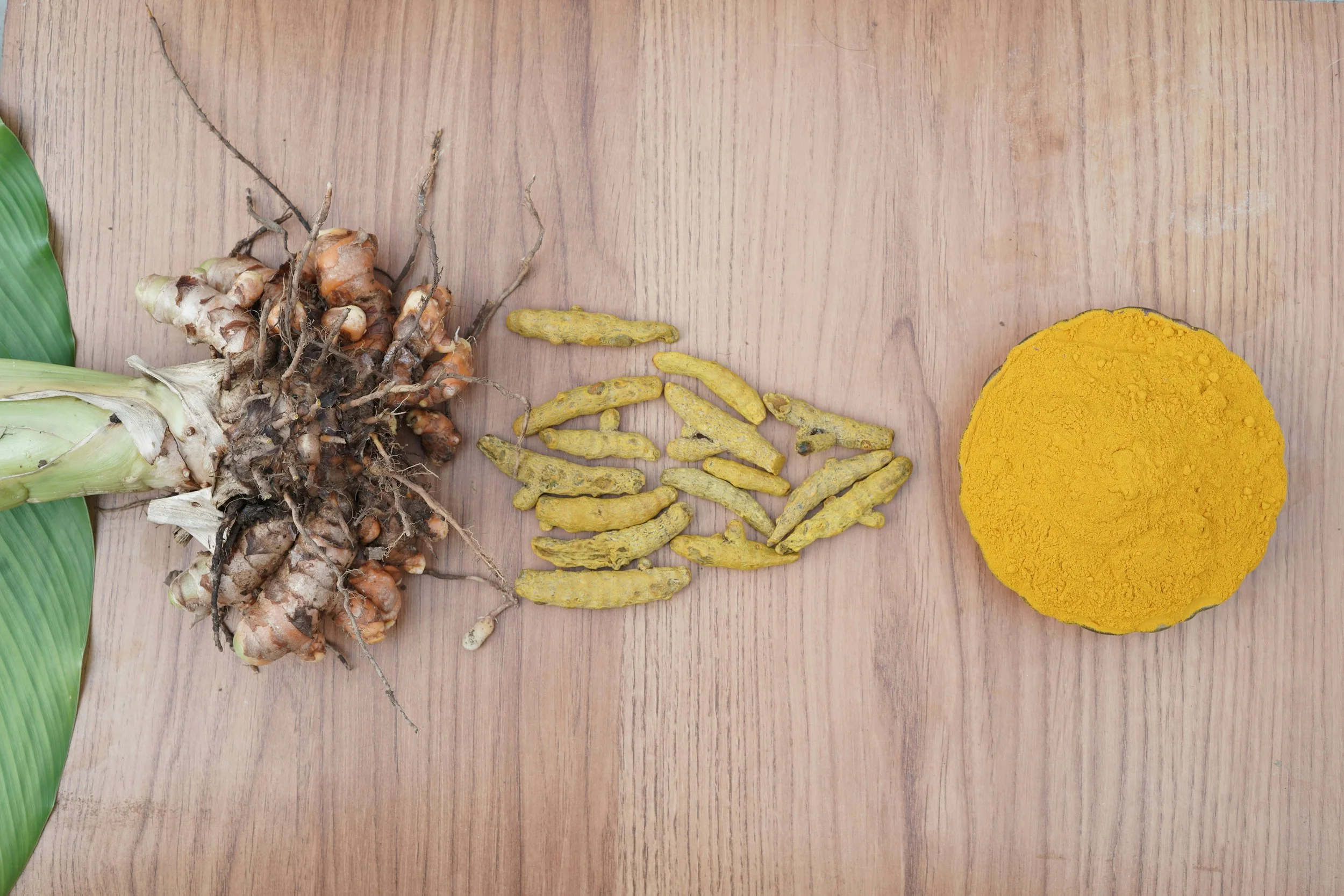
Turmeric
Curcuma longa
About Turmeric
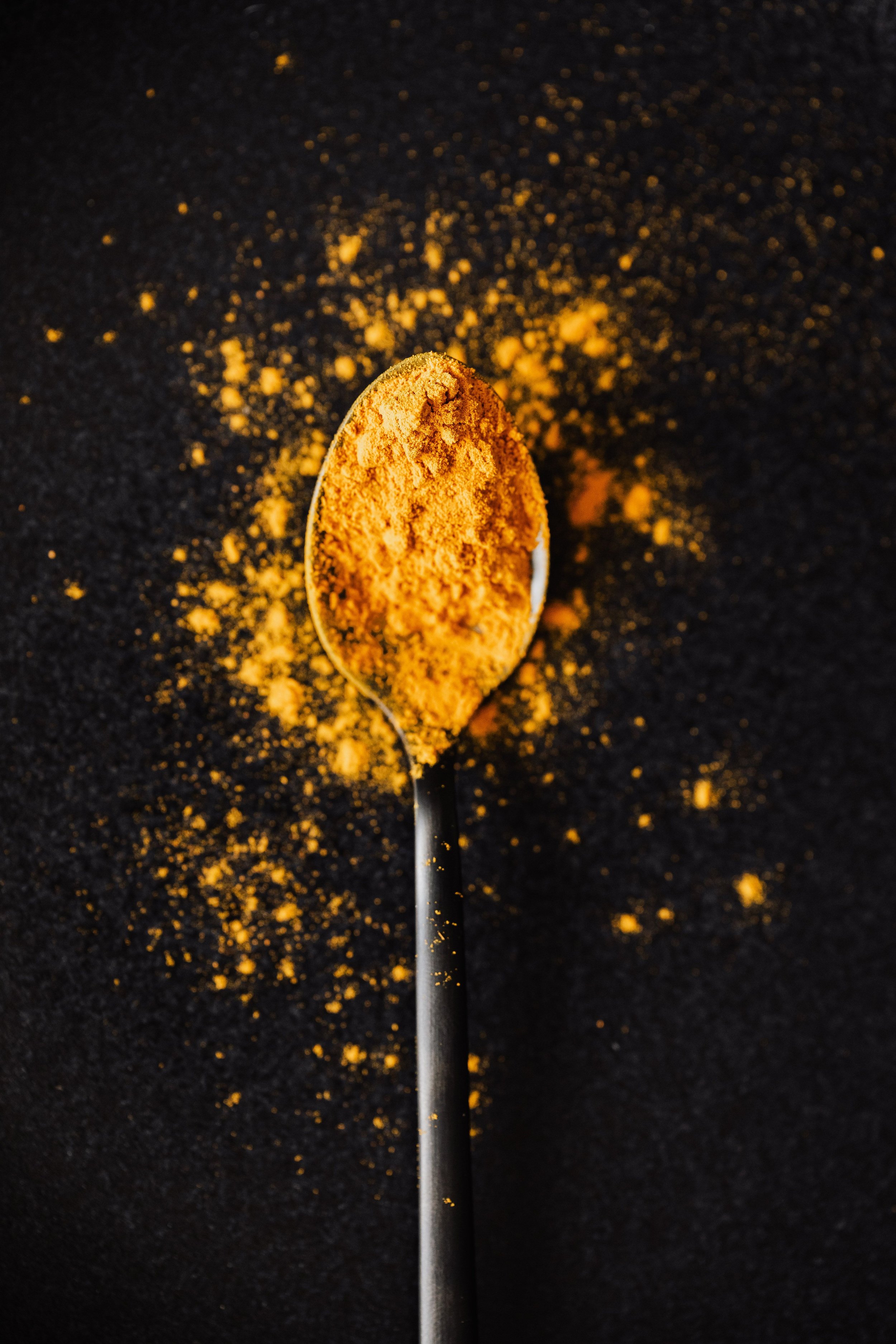
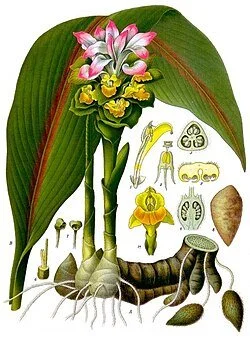
In the Ginger family, this tropical beauty is well known as an orange spice but unknown to most is how beautiful its flowers are! And when they die back its time to harvest, contains the anti-inflammatory curcumin
Native Range: South Asia, particularly India and Indonesia
Height: Typically grows 3–4 feet tall
Foliage: Large, broad, oblong green leaves with prominent parallel veins
Flowers: Showy, cone-shaped spikes featuring white-to-pink petals; flowers are usually sterile and do not produce seeds
Hardiness Zones: Perennial in USDA Zones 8–11; can be grown as an annual or in containers in cooler climates
Sunlight: Prefers partial shade or dappled light, though it can tolerate full sun in humid environments
Soil: Rich, fertile, well-draining soil with high organic matter. It does not perform well in heavy clay
Watering: High water requirement. Keep soil consistently moist but never waterlogged to prevent rhizome rot
Planting: Early spring is best. Plant rhizome pieces (with 1–2 "eyes") 2–4 inches deep and 12–15 inches apart
High in: Aluminum, Iron, Manganese, Niacin, Potassium, Selenium, Silicon, Vitamin A.
Medicinal Actions that may occur if taken: Analgesic Alterative Anti-inflammatory (particularly in the GI tract) Antioxidant Anti-spasmodic Hepatoprotective Cholagogue Carminative Chelator Choleretic Antimicrobial Anti-Viral Anti-fungal Anthelmintic Diaphoretic Stomachic Vulnerary
Possible Benefits
Curcumin may encourage the immune system to send macrophages to the brain.
One of the herbs’ active ingredients, curcumin, has anti-inflammatory effects comparable to cortisone.
Turmeric has been shown to reduce symptoms associated with inflammatory bowel disorders.
Turmeric is a carminative and smooth muscle antispasmodic that alleviates digestive cramping, gas and Bloating.
Turmeric improves intestinal micro flora. Turmeric may support the digestive tract following a recent use of antibiotics.
Turmeric enhances hepatic detoxification of heavy metals and environmental toxins.
Turmeric may lower serum cholesterol levels.
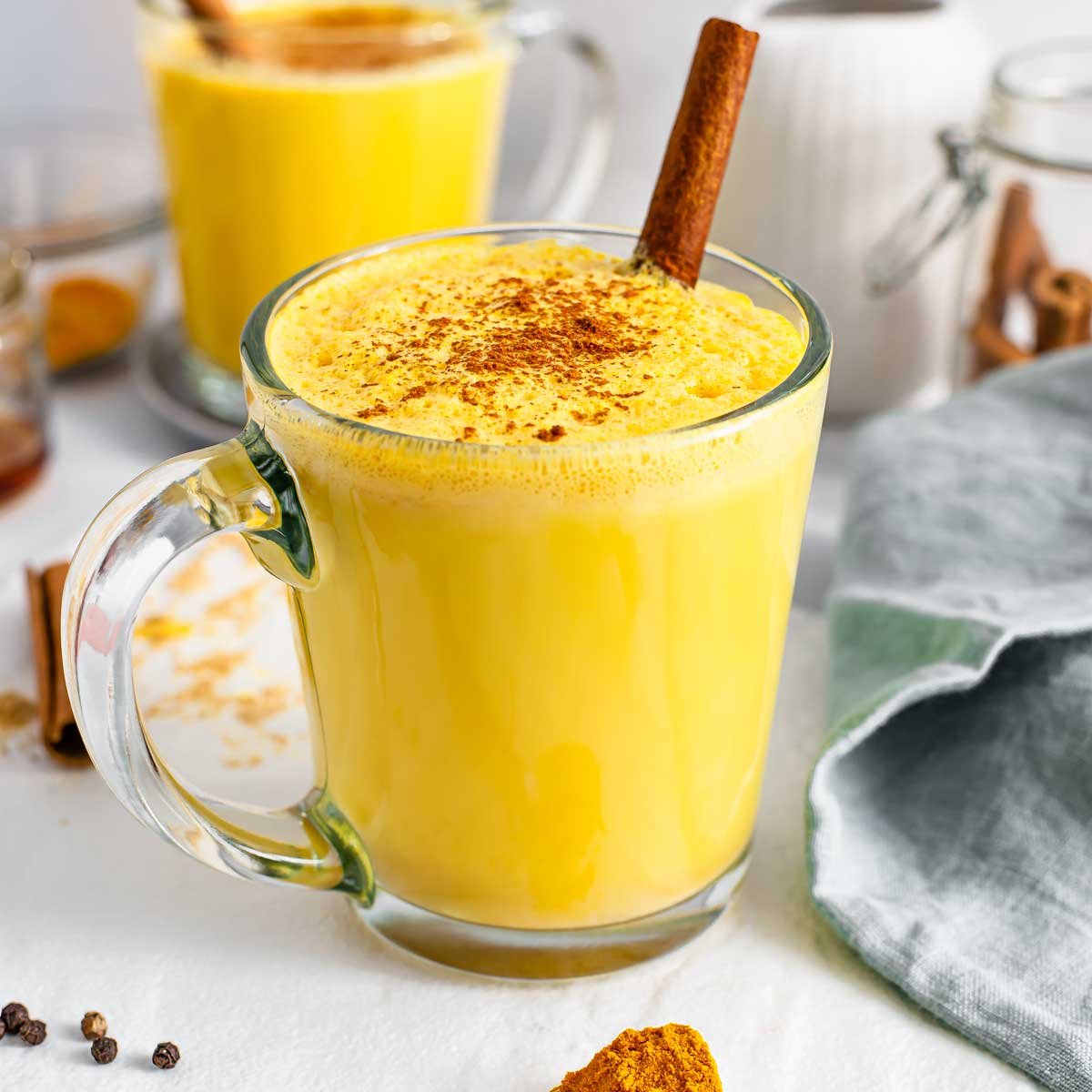
Recipe: Golden Milk
This comforting Golden Milk (Turmeric Milk) is a soothing, anti-inflammatory drink perfect for pain and inflammation. It takes just 15 minutes to make using rich spices, a touch of sweetness, and your favorite milk.
Ingredients (1 Serving)
Milk: 1 cup (dairy, oat(creamy), or coconut milk work best)
Turmeric: 1 tsp ground or 2 tsp fresh (diced)
Cinnamon: ¼ tsp ground
Ginger: ¼ tsp ground (or a ½-inch slice of fresh, grated ginger)
Black Pepper: 1 pinch (essential for absorbing the turmeric)
Sweetener: 1 tsp maple syrup or honey (to taste)
Optional: ½ tsp coconut oil for extra creaminess
Instructions
Simmer: Combine all ingredients (except the sweetener) in a small saucepan over medium heat for 15 minutes.
Steep: Turn off the heat, and steep for 5 minutes so the flavors meld. With a cover on the pan.
Strain & Serve: Remove from the heat, strain if you use fresh ginger or turmeric, and stir in your sweetener.